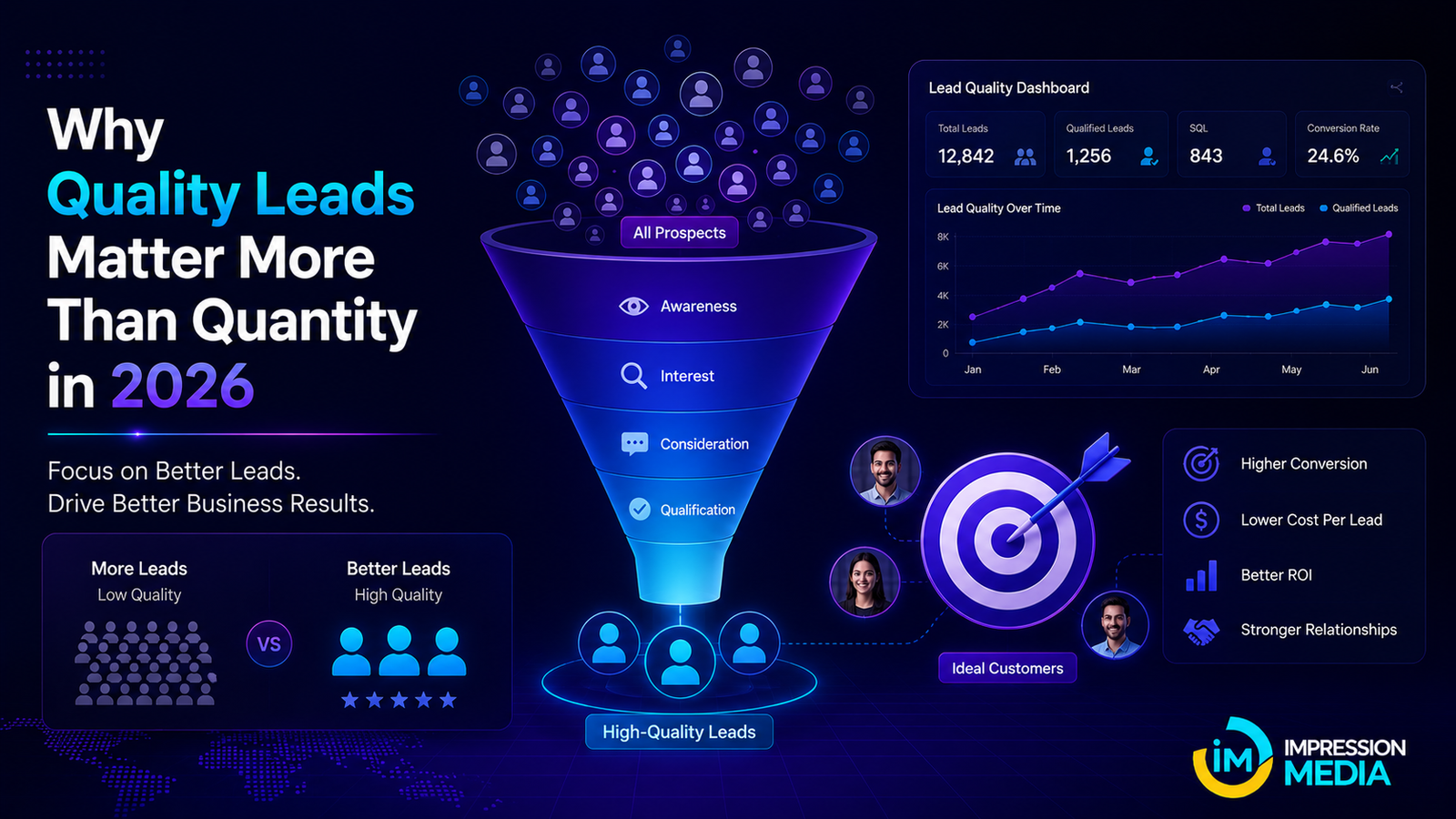
Why Quality Leads Matter More Than Quantity in 2026
Generating leads is an important part of growing any business. More leads can mean more potential customers. However, getting a large number of leads does not always mean getting more sales.
Some leads may have little interest in your product or service. Others may not have the budget, need, or authority to make a purchase. This is why businesses are now focusing more on quality leads than simply increasing lead numbers.
In 2026, a strong lead generation strategy should focus on reaching the right people. Quality leads can help sales teams save time, improve conversions, and generate better returns.
Let's understand why quality leads matter more than quantity and how businesses can attract them.
What Are Quality Leads?
A quality lead is a potential customer who has a genuine interest in your product or service.
They are more likely to engage with your business and eventually make a purchase. A quality lead usually matches your target customer profile and has a real need for what you offer.
For example, a software company may receive 500 enquiries. However, only 50 may come from businesses that actually need its software.
Those 50 leads can be more valuable than the other 450.
Why More Leads Do Not Always Mean More Sales
Businesses often measure lead generation success by the number of leads they receive.
However, this approach can create problems.
A campaign may generate thousands of leads but produce very few customers. Sales teams then spend valuable time contacting people who have little chance of converting.
This increases sales costs and reduces team productivity.
Instead of asking, "How many leads did we generate?" businesses should also ask:
- Are these leads relevant?
- Do they need our product?
- Can they afford our solution?
- Are they ready to make a decision?
- How many leads become customers?
These questions provide a clearer picture of lead generation performance.
5 Reasons Quality Leads Matter More in 2026
1. Higher Conversion Rates
Quality leads are more likely to become customers.
They already have a need or interest in your product. This makes it easier for sales teams to explain the value of the solution and move the conversation forward.
A higher conversion rate can help businesses generate more revenue without constantly increasing their lead volume.
2. Lower Customer Acquisition Costs
Acquiring leads requires money and resources.
Businesses may spend money on paid advertising, content marketing, SEO, social media advertising, and other channels.
If most leads never convert, the cost of acquiring each customer increases.
Quality lead generation helps businesses focus their budget on audiences with stronger purchase potential.
3. Better Sales Team Productivity
Sales teams have limited time.
When sales representatives receive irrelevant leads, they spend hours making calls and sending emails without meaningful results.
Quality leads allow sales teams to focus their efforts on prospects who are more likely to buy.
This improves productivity and creates a more efficient sales process.
4. Better Customer Experience
Customers do not want irrelevant messages.
When businesses target the right audience, they can provide more useful information and personalised communication.
This creates a better customer experience from the first interaction.
Relevant communication can also help build trust between the customer and the brand.
5. Higher Return on Marketing Investment
Marketing performance should not be measured only by clicks, impressions, or lead numbers.
Businesses should also consider revenue and conversions.
Quality leads have a greater chance of becoming paying customers. This can improve the overall return on marketing investment.
How to Generate More Quality Leads
Generating quality leads requires a focused strategy.
1. Define Your Ideal Customer
Start by understanding who your best customers are.
Consider factors such as:
- Industry
- Location
- Company size
- Job role
- Budget
- Business needs
- Buying behaviour
Creating an ideal customer profile helps marketers target the right audience.
2. Create Relevant Content
Useful content can attract people who are already searching for solutions.
Businesses can create:
- Blog posts
- Case studies
- Guides
- Videos
- Webinars
- Product comparisons
- FAQs
Good content answers customer questions and builds trust before the sales conversation begins.
3. Use Targeted Advertising
Paid advertising can generate large numbers of leads. However, targeting is critical.
Businesses should create campaigns around specific customer groups and their needs.
Targeted digital advertising can help reduce irrelevant enquiries and improve lead quality.
4. Improve Your Landing Pages
Your landing page plays an important role in lead generation.
A good landing page should clearly explain the offer and make the next step simple.
Use a strong headline, useful information, relevant visuals, and a clear call to action.
Avoid asking for unnecessary information in your lead form.
5. Score and Prioritise Leads
Not every lead has the same value.
Lead scoring helps businesses rank prospects based on factors such as engagement, company information, interest, and buying intent.
Sales teams can then prioritise leads that show stronger potential.
Quality Leads and Lead Nurturing
Not every quality lead is ready to buy immediately.
Some prospects may need more information before making a decision.
This is where lead nurturing becomes important.
Businesses can use email marketing, educational content, follow-ups, and personalised communication to stay connected with potential customers.
A strong nurturing strategy can gradually move interested prospects closer to a purchase.
Metrics That Help Measure Lead Quality
Businesses should track more than the number of leads generated.
Important metrics include:
- Lead-to-customer conversion rate
- Cost per qualified lead
- Customer acquisition cost
- Sales conversion rate
- Revenue generated per lead
- Customer lifetime value
These metrics provide a better understanding of whether your lead generation strategy is actually working.
Conclusion
In 2026, successful businesses should focus on attracting the right leads, not simply generating more leads.
A large database may look impressive, but irrelevant leads can waste marketing budgets and sales resources. Quality leads are more likely to engage, convert, and become valuable customers.
Businesses can improve lead quality by understanding their ideal customers, creating useful content, targeting advertising carefully, optimising landing pages, and using lead scoring.
The goal of lead generation marketing should not simply be more names in a database. It should be more meaningful conversations, better conversions, and sustainable business growth.
When businesses focus on quality over quantity, their marketing and sales teams can work more efficiently and create better results.