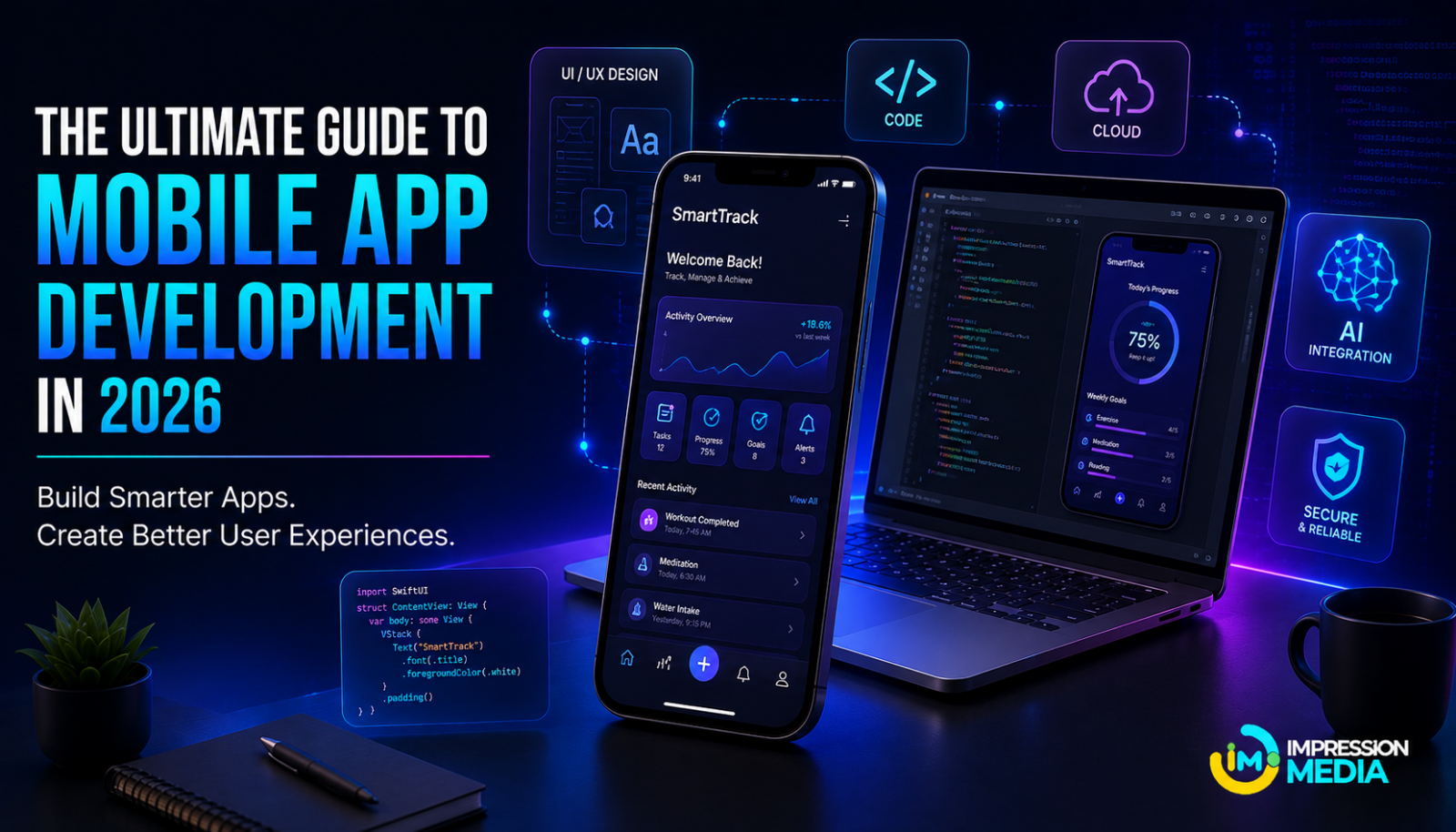
The Ultimate Guide to Mobile App Development in 2026
Mobile apps have become an important part of everyday life. People use apps to shop, order food, manage finances, book services, communicate, learn, and entertain themselves.
For businesses, this creates a valuable opportunity. A well-designed mobile app can help companies connect with customers, improve their services, increase engagement, and create new revenue opportunities.
However, building a successful app requires more than good design. Businesses need to understand their audience, choose the right technology, plan features carefully, and focus on user experience.
This mobile app development guide explains the key things businesses should know in 2026.
What Is Mobile App Development?
Mobile app development is the process of designing, building, testing, and maintaining applications for mobile devices.
Apps can be developed for different platforms, including Android and iOS.
The development process usually includes:
- Planning
- User research
- UI and UX design
- App development
- Testing
- Deployment
- Maintenance and updates
The goal is to create an app that solves a specific problem and provides a smooth experience for users.
Why Is Mobile App Development Important in 2026?
Smartphones have become a major channel for businesses to reach their customers.
A mobile app can provide a more direct connection than many traditional digital channels.
Businesses can use apps to:
- Improve customer engagement
- Offer personalised experiences
- Increase customer loyalty
- Simplify purchasing
- Provide faster services
- Send important notifications
- Generate additional revenue
A well-planned mobile app can therefore become an important part of a company's digital strategy.
Benefits of Mobile App Development for Businesses
1. Better Customer Engagement
Mobile apps give businesses a direct communication channel with customers.
Companies can provide personalised content, product recommendations, updates, and useful notifications.
This can encourage customers to interact with the brand more frequently.
2. Improved Customer Experience
An app can make common tasks easier.
Customers can browse products, place orders, make bookings, access services, or contact support from one convenient platform.
A simple and fast experience can improve customer satisfaction.
3. Stronger Customer Loyalty
Businesses can use mobile apps to create loyalty programs, personalised offers, rewards, and exclusive experiences.
These features can encourage customers to return and interact with the brand regularly.
4. New Revenue Opportunities
Mobile apps can support different business models.
These may include:
- In-app purchases
- Subscription plans
- E-commerce sales
- Premium features
- Advertising
- Booking fees
The right model depends on the business and its target audience.
Types of Mobile Apps Businesses Can Build
Different businesses require different types of applications.
1. E-commerce Apps
E-commerce apps allow customers to browse products, add items to carts, make payments, and track orders.
2. On-Demand Apps
These apps connect customers with services such as food delivery, transportation, home services, or professional support.
3. Finance Apps
Financial apps can help users manage payments, accounts, investments, and other financial activities.
4. Healthcare Apps
Healthcare applications can provide appointment booking, reminders, teleconsultation, and access to useful health-related services.
5. Business and Productivity Apps
Companies can build internal or customer-facing apps for communication, project management, booking, CRM, and other business functions.
How to Start a Mobile App Development Project
Building an app requires careful planning.
1. Define the Purpose of the App
Start by identifying the problem your app will solve.
Ask:
- Who will use the app?
- What problem does it solve?
- Why would people download it?
- What makes it different?
A clear purpose helps prevent unnecessary features.
2. Research Your Target Audience
Understand your potential users before development begins.
Research their needs, habits, preferences, and challenges.
This information can influence the app's features and overall user experience.
3. Decide the Core Features
Start with essential features rather than trying to build everything at once.
For example, an e-commerce app may need:
- User registration
- Product search
- Product pages
- Shopping cart
- Payment options
- Order tracking
- Customer support
You can introduce additional features as the app grows.
4. Focus on UI and UX Design
User interface and user experience play an important role in app success.
The design should be clean, intuitive, and easy to navigate.
Users should be able to complete common actions without confusion.
A good mobile app design combines visual appeal with practical functionality.
Choosing the Right Mobile App Development Approach
Businesses have several development options.
1. Native App Development
Native apps are built specifically for platforms such as Android or iOS.
They can provide strong performance and access to platform-specific features.
2. Cross-Platform Development
Cross-platform development allows businesses to build apps that work across multiple platforms using a shared codebase.
This approach can reduce development time and simplify maintenance.
3. Progressive Web Apps
Progressive web apps combine features of websites and mobile applications.
They can provide app-like experiences through web browsers without requiring traditional app installation.
The right approach depends on your budget, requirements, audience, and long-term goals.
Mobile App Security Matters
Security should be considered from the beginning of development.
Mobile apps may handle personal information, payment details, account information, or other sensitive data.
Businesses should follow appropriate security practices, such as:
- Secure authentication
- Data encryption
- Secure APIs
- Regular security testing
- Safe payment integration
- Regular software updates
Strong security can protect users and build trust.
Testing and App Maintenance
An app is not finished when it reaches the app store.
Regular testing and maintenance are important for long-term performance.
Test the app across different devices and operating systems. Look for crashes, broken features, slow loading, and usability problems.
After launch, businesses should continue releasing updates and fixing issues.
User feedback can also provide valuable ideas for future improvements.
Mobile App Development Trends in 2026
Technology continues to change the way businesses build and use mobile applications.
1. Artificial Intelligence
AI can support personalised recommendations, chatbots, automation, search, and other app features.
2. Personalised Experiences
Apps can use customer preferences and behaviour to deliver more relevant experiences.
3. Cloud-Based Technology
Cloud services can help businesses manage data, backend systems, and app infrastructure more efficiently.
4. Advanced Mobile Security
As apps handle more data, businesses are placing greater focus on authentication, privacy, and security.
Common Mobile App Development Mistakes to Avoid
Businesses can face problems when they rush the development process.
Common mistakes include:
- Building an app without clear goals
- Adding too many unnecessary features
- Ignoring user experience
- Failing to test across devices
- Neglecting app security
- Ignoring customer feedback
- Not planning regular updates
An clear development plan can help avoid these issues.
How Much Does Mobile App Development Cost?
The cost of mobile app development depends on several factors.
These include:
- App complexity
- Number of features
- Design requirements
- Development platform
- Backend requirements
- Third-party integrations
- Security requirements
- Testing and maintenance
A simple business app may require a smaller investment than a complex e-commerce or financial application.
Businesses should focus on building the features that provide real value instead of choosing features based only on cost.
Conclusion
Mobile app development can help businesses create stronger connections with their customers and deliver convenient digital experiences.
A successful app requires clear goals, audience research, thoughtful design, reliable technology, strong security, and regular maintenance.
Businesses should start with essential features and focus on solving real customer problems. As the app grows, new features can be introduced based on user feedback and business needs.
In 2026, mobile apps are more than digital products. They can become important tools for customer engagement, business growth, service delivery, and digital transformation.
With the right mobile app development strategy, businesses can create useful experiences that keep customers connected and support long-term growth.