
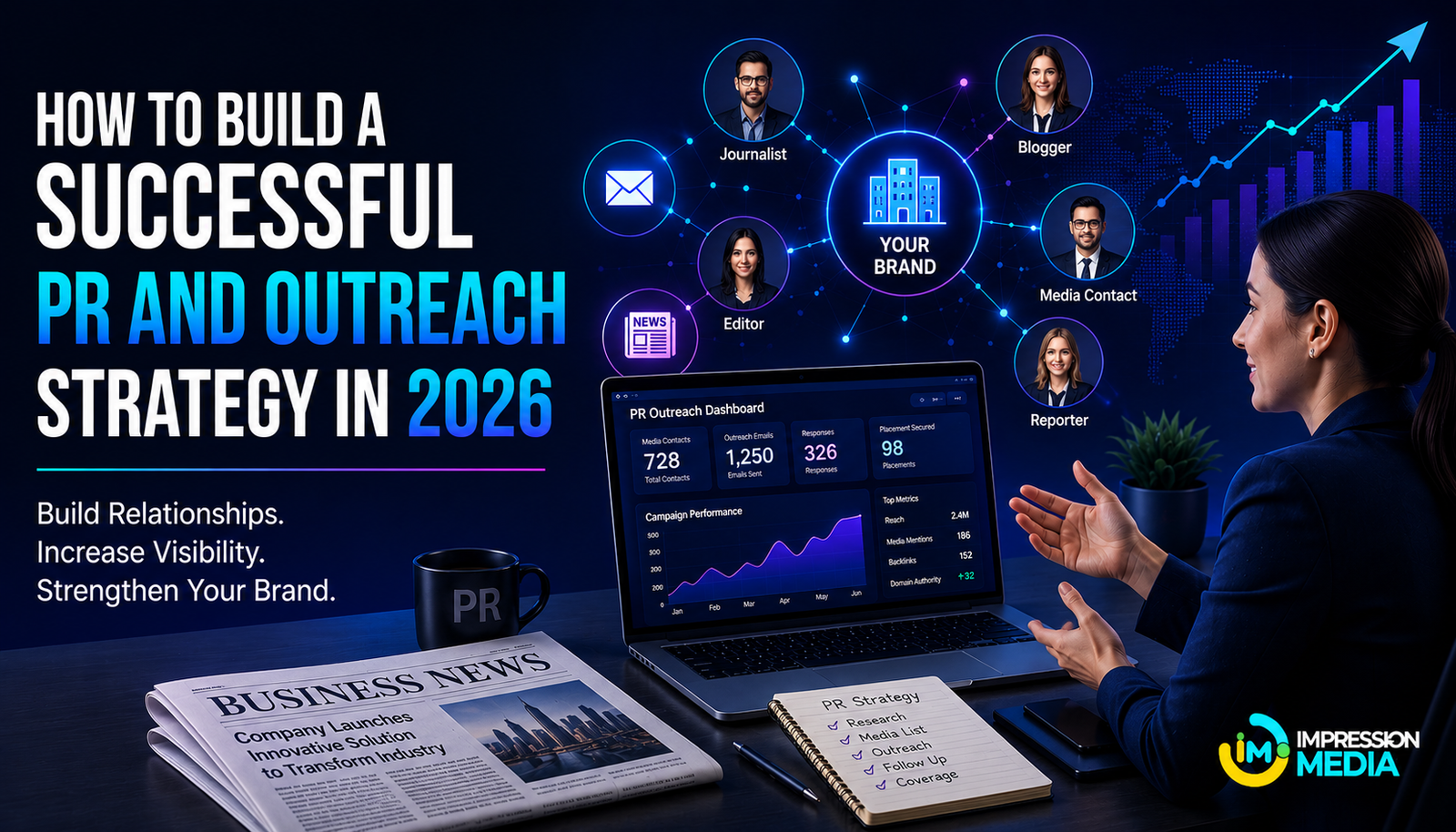
How to Build a Successful PR and Outreach Strategy in 2026
Building a strong brand takes more than good products and services. Businesses also need visibility, credibility, and meaningful relationships with their audiences.
This is where PR and outreach can help.
A well-planned PR and outreach strategy can help businesses get noticed, build trust, connect with media outlets, and reach relevant audiences. It can also support SEO, brand awareness, and long-term business growth.
In 2026, digital platforms have made it easier for brands to communicate with customers. However, competition for attention has also increased.
Businesses therefore need a strategic approach to PR and outreach.
This guide explains how to build a successful PR and outreach strategy in 2026.
What Is PR and Outreach?
Public relations, or PR, focuses on managing how people see and understand a brand.
Outreach involves actively connecting with journalists, publishers, influencers, industry experts, websites, and other relevant people.
A PR and outreach strategy can include:
- Media relations
- Digital PR
- Press releases
- Journalist outreach
- Guest contributions
- Influencer relationships
- Thought leadership
- Online reputation management
- Industry partnerships
The goal is to build valuable relationships and create positive exposure for your brand.
Why PR and Outreach Matter in 2026
People are exposed to thousands of marketing messages online. Traditional advertisements alone may not always build strong credibility.
PR can help businesses gain attention through trusted publications, industry websites, news platforms, and relevant creators.
A successful strategy can help businesses:
- Increase brand awareness
- Build credibility
- Reach new audiences
- Generate website traffic
- Support SEO
- Strengthen online reputation
- Build industry authority
PR and outreach are therefore important parts of a broader digital marketing strategy.
How to Build a Successful PR and Outreach Strategy
A successful campaign starts with clear goals and careful planning.
1. Define Your PR Goals
Start by deciding what you want your PR campaign to achieve.
Your goals may include:
- Increasing brand awareness
- Getting media coverage
- Building industry authority
- Increasing website traffic
- Supporting product launches
- Improving online reputation
- Reaching new audiences
Clear goals help you choose the right outreach channels and measure campaign performance.
2. Understand Your Target Audience
PR works best when your message reaches the right people.
Identify your target audience before starting outreach.
Consider:
- Their interests
- Their problems
- Their preferred platforms
- Their industry
- Their buying behaviour
- The content they consume
Understanding your audience helps you create relevant stories and identify suitable publications.
3. Create a Strong Brand Story
Journalists and publishers need a reason to cover your business.
Simply saying that your company is great may not be enough.
Create stories that provide real value.
You can focus on:
- New product launches
- Original research
- Industry trends
- Business milestones
- Customer success stories
- Expert opinions
- New technologies
- Community initiatives
A strong story gives journalists and publishers something interesting to share with their audiences.
4. Build a Relevant Media List
Do not send the same pitch to hundreds of random contacts.
Instead, build a targeted media list.
Look for journalists, editors, bloggers, publishers, and industry websites that cover topics related to your business.
Research their previous work before contacting them.
Relevant outreach usually has a better chance of getting attention.
5. Personalise Your Outreach
Generic messages are easy to ignore.
A personalised pitch shows that you understand the recipient's work.
Mention a recent article, topic, or project when it is genuinely relevant.
Keep your message short and explain why your story could be useful to their audience.
Personalisation can make outreach more professional and meaningful.
6. Create Valuable Content
Good PR often starts with good content.
Businesses can create:
- Research reports
- Expert articles
- Industry studies
- Original statistics
- Case studies
- Guides
- Interviews
- Thought leadership articles
Useful content gives media professionals and publishers something valuable to reference.
It can also help establish your business as an authority in its industry.
7. Use Digital PR for Online Visibility
Digital PR combines traditional public relations with digital marketing techniques.
It can help businesses earn mentions and links from relevant websites.
Digital PR can support SEO by increasing brand visibility and potentially earning quality backlinks.
However, the main focus should always be creating something genuinely useful or newsworthy.
PR and Outreach for SEO
PR and SEO can work together effectively.
When reputable websites mention your brand, more people can discover your business.
Relevant media coverage can also create opportunities for referral traffic and backlinks.
However, businesses should not focus only on getting links.
A strong PR campaign should focus on:
- Brand visibility
- Credibility
- Relevant exposure
- Useful content
- Genuine relationships
SEO benefits should support the larger PR strategy.
Common PR and Outreach Mistakes to Avoid
Businesses can waste time and resources by using the wrong outreach approach.
1. Sending Mass Emails
Sending the same pitch to hundreds of contacts can reduce response rates.
Focus on relevance and personalisation instead.
2. Creating Weak Stories
Not every company update is newsworthy.
Focus on stories that offer useful information, unique insights, or genuine value.
3. Ignoring Follow-Ups
People are busy and may miss your first message.
A polite follow-up can help bring your pitch back to their attention.
However, avoid sending excessive messages.
4. Focusing Only on Promotion
PR content should provide value to the audience.
Avoid turning every pitch into a sales advertisement.
How to Measure PR and Outreach Performance
Measuring results helps businesses understand what is working.
Important metrics include:
- Media mentions
- Website referral traffic
- Brand searches
- Audience reach
- Engagement
- Backlinks
- Leads
- Conversions
The right metrics depend on your campaign goals.
For example, a brand awareness campaign may focus on reach and mentions. A lead generation campaign may focus more on website traffic and conversions.
The Future of PR and Outreach in 2026
PR continues to change as digital platforms evolve.
Businesses now have more opportunities to communicate directly with audiences through social media, websites, podcasts, newsletters, videos, and online publications.
Artificial intelligence can also help marketers research topics, identify potential media opportunities, organise outreach, and analyse campaign data.
However, relationships remain at the heart of effective PR.
Useful stories, genuine communication, and strong industry relationships will continue to matter.
Conclusion
A successful PR and outreach strategy in 2026 requires more than sending press releases or contacting journalists.
Businesses need clear goals, strong stories, relevant media lists, personalised outreach, valuable content, and consistent relationship building.
PR can help businesses improve brand awareness, build credibility, reach new audiences, and strengthen their digital presence.
When combined with SEO, content marketing, social media, and other digital strategies, PR and outreach can become a powerful tool for long-term business growth.
The key is simple: create something valuable, reach the right people, and build genuine relationships.