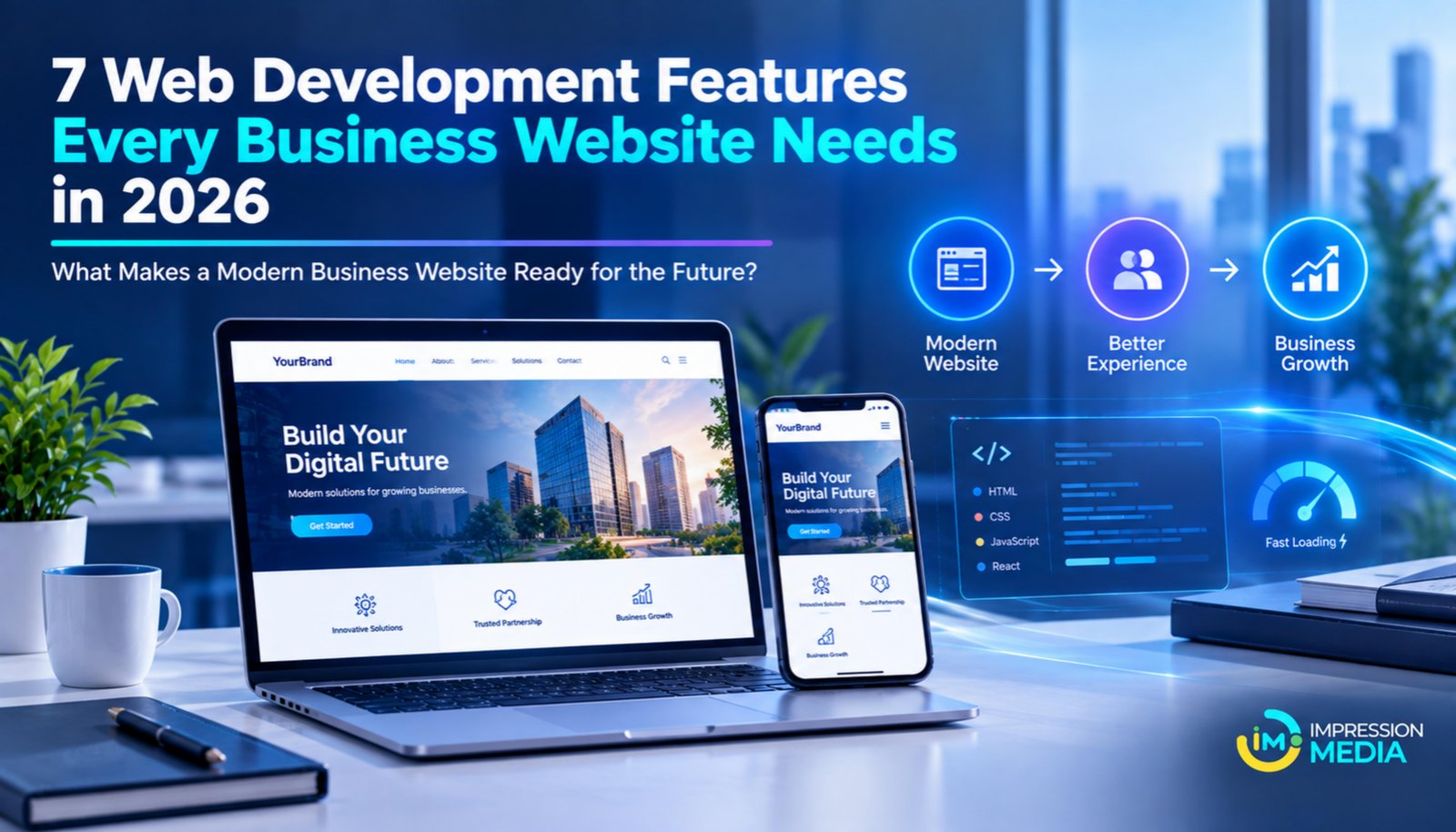
7 Web Development Features Every Business Website Needs in 2026
A business website is more than an online brochure.
It is often the first place where potential customers learn about a company, explore its services, compare options, and decide whether to get in touch.
That makes web development an important part of a business's digital presence.
In 2026, businesses need websites that are fast, secure, easy to use, and designed around the needs of their customers.
A visually attractive website is useful, but appearance alone is not enough. The technology behind the website also affects performance, usability, security, and growth.
Here are 7 important web development features every business website should consider in 2026.
1. Mobile-Friendly and Responsive Design
A large portion of website traffic comes from mobile devices.
A business website should therefore work properly across smartphones, tablets, laptops, and desktop computers.
Why Responsive Web Development Matters
A responsive website automatically adapts its layout to different screen sizes.
Users should be able to:
- Read content comfortably
- Navigate menus easily
- View images correctly
- Complete forms
- Click buttons without difficulty
- Browse products or services
A poor mobile experience can make visitors leave the website.
Responsive development also supports a consistent experience across different devices.
2. Fast Website Performance
Website speed can directly affect the user experience.
Visitors generally do not want to wait for slow pages to load.
What Can Make a Website Slow?
Several factors can affect website performance, including:
- Large images
- Unnecessary plugins
- Poorly optimised code
- Slow hosting
- Too many third-party scripts
- Unoptimised videos
- Browser caching issues
Developers can improve performance through image optimisation, caching, efficient code, suitable hosting, and other technical improvements.
A faster website makes it easier for visitors to find and use information.
3. Strong Website Security
Security should be a priority for every business website.
Websites can face threats such as malicious software, unauthorised access, data theft, and other attacks.
Important Website Security Measures
Businesses should consider features such as:
- HTTPS encryption
- Secure authentication
- Regular software updates
- Strong passwords
- Access controls
- Secure backups
- Malware monitoring
- Firewall protection
Web developers should also follow secure coding practices.
If a website collects customer information, additional security measures may be necessary depending on the type of information being handled.
4. Search Engine-Friendly Development
A website can look great but still struggle to attract organic traffic if its technical structure is poor.
SEO-friendly web development helps search engines understand and access website content.
Important Technical SEO Elements
Developers should pay attention to:
- Clean website structure
- Descriptive URLs
- Proper heading hierarchy
- Mobile responsiveness
- Page speed
- Internal linking
- XML sitemaps
- Crawlability
- Structured data where appropriate
SEO should be considered during development rather than added as an afterthought.
5. Easy-to-Use Navigation
Visitors should be able to find important information without unnecessary effort.
Complicated navigation can create frustration.
Create a Clear Website Structure
A business website should make important pages easy to find.
Depending on the business, these may include:
- Home
- About
- Services
- Products
- Blog
- Contact
- Support
- Pricing
Use clear labels and logical menus.
A well-structured website helps visitors understand where they are and where they can go next.
6. Strong Forms and Conversion Features
A business website should make it easy for interested visitors to take the next step.
That could mean requesting a quote, booking a consultation, making a purchase, or submitting an enquiry.
Build Better Contact Forms
Good forms should be simple and relevant.
Only ask for information that is genuinely necessary.
For example, a basic business enquiry form might request:
- Name
- Email address
- Company name
- Service required
- Message
Long and complicated forms can discourage visitors from completing them.
Use Clear Calls to Action
Buttons such as Get a Quote, Book a Consultation, Request a Demo, or Contact Us can guide visitors toward the next step.
The CTA should match the purpose of the page.
7. Scalable and Easy-to-Maintain Architecture
A website may start small but grow over time.
Businesses may eventually add new services, products, landing pages, integrations, or content.
The website should be able to handle that growth.
Build With Future Growth in Mind
Scalable web development can make it easier to:
- Add new features
- Expand website content
- Integrate new tools
- Manage increasing traffic
- Connect third-party services
- Update website functionality
Developers should avoid building a system that becomes difficult or expensive to maintain as the business grows.
Additional Features Businesses Should Consider
The seven features above form a strong foundation, but some businesses may need additional functionality.
Depending on the website's purpose, this could include:
- Customer accounts
- Online payments
- E-commerce functionality
- Live chat
- CRM integration
- Booking systems
- Analytics
- Personalisation
- Multilingual support
- AI-powered tools
The right features depend on the business and its customers.
Adding technology simply because it is popular does not necessarily improve a website.
How to Choose the Right Web Development Features
Not every business needs the same website.
A small service company may need a fast website, contact forms, strong SEO, and simple navigation.
An e-commerce company may need product management, secure payments, customer accounts, search, and inventory integration.
Start With Business Goals
Before development begins, ask:
- Who will use the website?
- What should visitors do?
- What information do customers need?
- Which business processes should the website support?
- What integrations are required?
- How might the website grow in the future?
These questions can help businesses invest in features that have a practical purpose.
Why Professional Web Development Matters
Using a professional web development approach can help businesses build websites around their actual requirements.
Professional developers can consider:
- Technical architecture
- Security
- Performance
- Mobile compatibility
- SEO
- Integrations
- Scalability
- Maintenance
The result should not simply be a website that looks good.
It should be a website that works well for both the business and its customers.
Conclusion
A modern business website needs more than an attractive design.
It needs the right technology and functionality behind it.
Responsive design, fast performance, strong security, SEO-friendly development, clear navigation, effective conversion features, and scalable architecture can create a stronger foundation for a business website in 2026.
The most important thing is to choose features based on real business goals and customer needs.
A well-developed website can become an important part of a company's digital marketing strategy, customer experience, and long-term online presence.