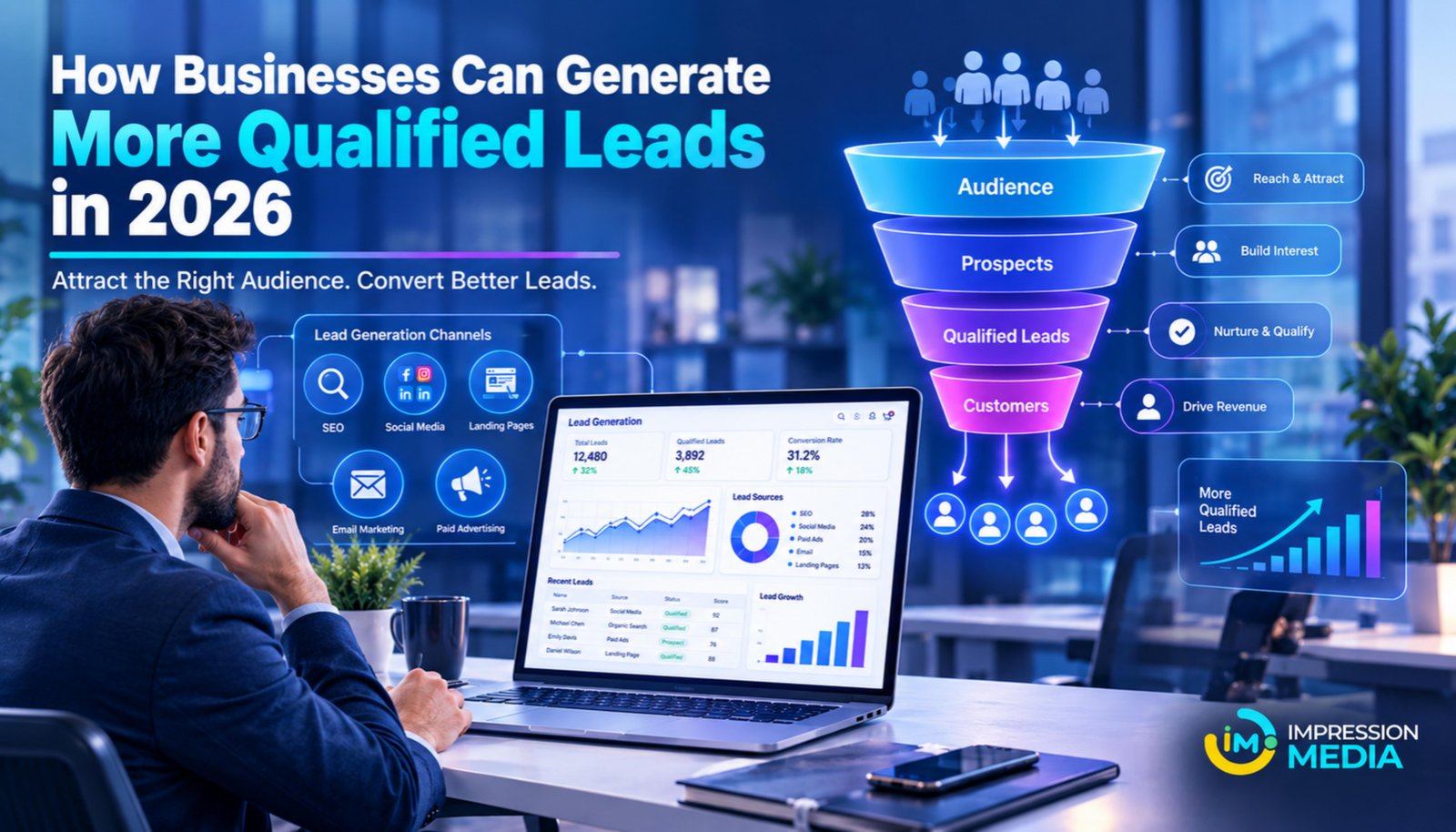
How Businesses Can Generate More Qualified Leads in 2026
Finding potential customers is important for every business.
However, not every lead has the same value.
Some people may show interest but never become customers. Others may already have a genuine need and a strong reason to buy.
These are qualified leads.
In 2026, businesses need smarter ways to attract people who are more likely to become customers. A strong lead generation strategy can help businesses improve marketing efficiency and support sales growth.
The focus should not only be on generating more leads. It should be on attracting the right people.
In this article, we explore practical ways businesses can generate more qualified leads in 2026.
What Is a Qualified Lead?
A qualified lead is a potential customer who matches specific criteria and shows meaningful interest in a product or service.
For example, a qualified lead may have:
- A genuine need
- Interest in your solution
- Relevant business or personal requirements
- Sufficient purchasing ability
- A suitable buying timeline
The exact definition depends on the business.
A B2B company may qualify leads based on company size and decision-making authority.
An e-commerce business may focus more on product interest and purchase behaviour.
Why Qualified Leads Matter
Businesses spend time and money attracting potential customers.
If most leads are unlikely to buy, sales teams can waste valuable time.
Qualified leads can make the sales process more focused.
They can help businesses:
- Improve sales efficiency
- Reduce wasted marketing spend
- Increase conversion opportunities
- Improve sales and marketing alignment
- Build stronger customer relationships
The goal is to attract people who have a genuine connection with your offering.
1. Define Your Ideal Customer
Before generating leads, understand who you want to attract.
Create a clear ideal customer profile (ICP).
Identify Your Ideal Customer
Consider factors such as:
- Age or demographic profile
- Location
- Industry
- Business size
- Job role
- Interests
- Challenges
- Purchasing needs
- Budget range
The relevant factors depend on your business model.
A clear customer profile helps you create more focused campaigns.
2. Create Valuable Content
Content can attract people who are actively looking for solutions.
Businesses can create content around customer questions and problems.
Useful formats include:
- Blog posts
- Guides
- Case studies
- Videos
- Webinars
- E-books
- Industry reports
- Checklists
Solve Real Customer Problems
Do not create content only to promote your products.
Answer questions your potential customers actually have.
For example, a software company could create a guide explaining how businesses can improve workflow management.
Someone searching for that information may already have a relevant business need.
This creates an opportunity to introduce your solution naturally.
3. Use Search Engine Optimization
SEO can help businesses attract people who are actively searching for information.
Target relevant keywords that match your products and services.
Focus on Search Intent
Not every keyword represents buying intent.
Someone searching for "what is CRM software" may be researching.
Someone searching for "CRM software for small business" may be closer to making a decision.
Businesses should create content for different stages of the buying journey.
This can help attract more relevant organic traffic.
4. Build High-Converting Landing Pages
Landing pages can play an important role in lead generation.
A good landing page should make the next step clear.
Include Important Landing Page Elements
Your landing page can include:
- Clear headline
- Relevant benefits
- Supporting information
- Customer proof
- Simple lead form
- Strong call to action
Remove unnecessary distractions.
The page should quickly explain why visitors should take action.
5. Use Targeted Advertising
Paid advertising can help businesses reach specific audiences.
Platforms can provide targeting options based on demographics, interests, behaviour, search activity, and other signals.
Match Ads With Customer Intent
Create advertisements around specific customer needs.
For example, instead of using a generic message, focus on a specific problem your product solves.
Relevant messaging can attract people who already need that solution.
6. Offer Useful Lead Magnets
A lead magnet gives potential customers a useful resource in exchange for their contact information.
Examples include:
- Free guides
- Templates
- Checklists
- Reports
- Webinars
- Product demos
- Free consultations
Make the Offer Relevant
The lead magnet should connect directly to your product or service.
If the resource attracts the wrong audience, your lead numbers may increase without improving lead quality.
Relevance matters more than simply offering something for free.
7. Use Strong Calls to Action
A clear call to action tells visitors what to do next.
Examples include:
- Request a Demo
- Get a Free Consultation
- Download the Guide
- Book a Call
- Get a Quote
- Start a Free Trial
Match the CTA With Buyer Intent
A visitor researching a topic may not be ready to buy.
A free guide may work better at this stage.
Someone comparing solutions may respond better to a demo or consultation.
Match the CTA with the customer's stage.
8. Improve Lead Qualification
Generating leads is only the beginning.
Businesses also need a system for identifying the most relevant prospects.
Use Lead Qualification Criteria
Businesses can evaluate leads based on:
- Customer needs
- Budget
- Buying timeline
- Company size
- Decision-making authority
- Product interest
This can help sales teams prioritise their time.
9. Nurture Leads Before the Sales Conversation
Not every qualified lead is ready to buy immediately.
Some prospects need more information before making a decision.
Lead nurturing keeps your business connected with these prospects.
Use Helpful Follow-Up Content
Businesses can use:
- Email sequences
- Educational content
- Product information
- Case studies
- Customer stories
- Webinars
- Product demonstrations
The goal is to help prospects make informed decisions.
Avoid sending constant promotional messages.
10. Use Customer Data to Improve Lead Generation
Data can help businesses understand which campaigns generate better leads.
Track the performance of different marketing channels.
Monitor Important Metrics
Useful metrics include:
- Cost per lead
- Lead-to-customer conversion rate
- Landing page conversion rate
- Customer acquisition cost
- Marketing qualified leads
- Sales qualified leads
- Revenue from leads
These metrics can show where your lead generation strategy needs improvement.
11. Align Marketing and Sales Teams
Marketing and sales teams should agree on what makes a lead valuable.
Without alignment, marketing may focus on lead volume while sales focuses on lead quality.
Create a Shared Definition of a Qualified Lead
Marketing and sales teams should agree on:
- Lead qualification criteria
- Handover process
- Follow-up time
- Lead scoring
- Feedback process
Sales feedback can also help marketers improve future campaigns.
12. Use AI to Support Lead Generation
Artificial intelligence is becoming more useful in lead generation.
AI tools can help businesses analyse customer data, identify patterns, personalise communication, and automate parts of the lead management process.
Use AI Where It Adds Value
Businesses can explore AI for:
- Lead scoring
- Customer segmentation
- Chatbots
- Personalised emails
- Data analysis
- Lead qualification
However, businesses should maintain human oversight.
AI should support the sales and marketing process rather than replace meaningful customer interactions.
Common Lead Generation Mistakes to Avoid
Businesses can weaken their lead generation efforts through simple mistakes.
1. Targeting Everyone
A broad audience may generate traffic but not qualified leads.
Define your ideal customer clearly.
2. Using Generic Content
Generic content may fail to address specific customer problems.
Create content around real audience needs.
3. Ignoring Follow-Ups
A good lead can lose interest without timely communication.
Create a consistent follow-up process.
4. Measuring Only Lead Volume
More leads do not always mean better results.
Track the number of leads that become genuine sales opportunities and customers.
How to Build a Strong Qualified Lead Strategy in 2026
A successful strategy should connect different marketing activities.
A simple process can include:
- Define your ideal customer.
- Research their problems and needs.
- Create useful content.
- Target relevant search terms.
- Run focused advertising campaigns.
- Build dedicated landing pages.
- Offer relevant lead magnets.
- Qualify incoming leads.
- Nurture prospects.
- Measure results and optimise campaigns.
This creates a connected lead generation strategy rather than relying on one marketing channel.
Conclusion
Generating qualified leads requires more than attracting large amounts of traffic.
Businesses need to understand their ideal customers and create marketing experiences that match their needs.
Content marketing, SEO, paid advertising, landing pages, lead magnets, strong CTAs, lead qualification, and nurturing can all support better lead generation.
Businesses should also use data to understand which channels and campaigns produce valuable prospects.
In 2026, the focus should be on attracting the right audience, building trust, and guiding potential customers toward meaningful action.
A well-planned lead generation strategy can help businesses create better sales opportunities and support sustainable growth.