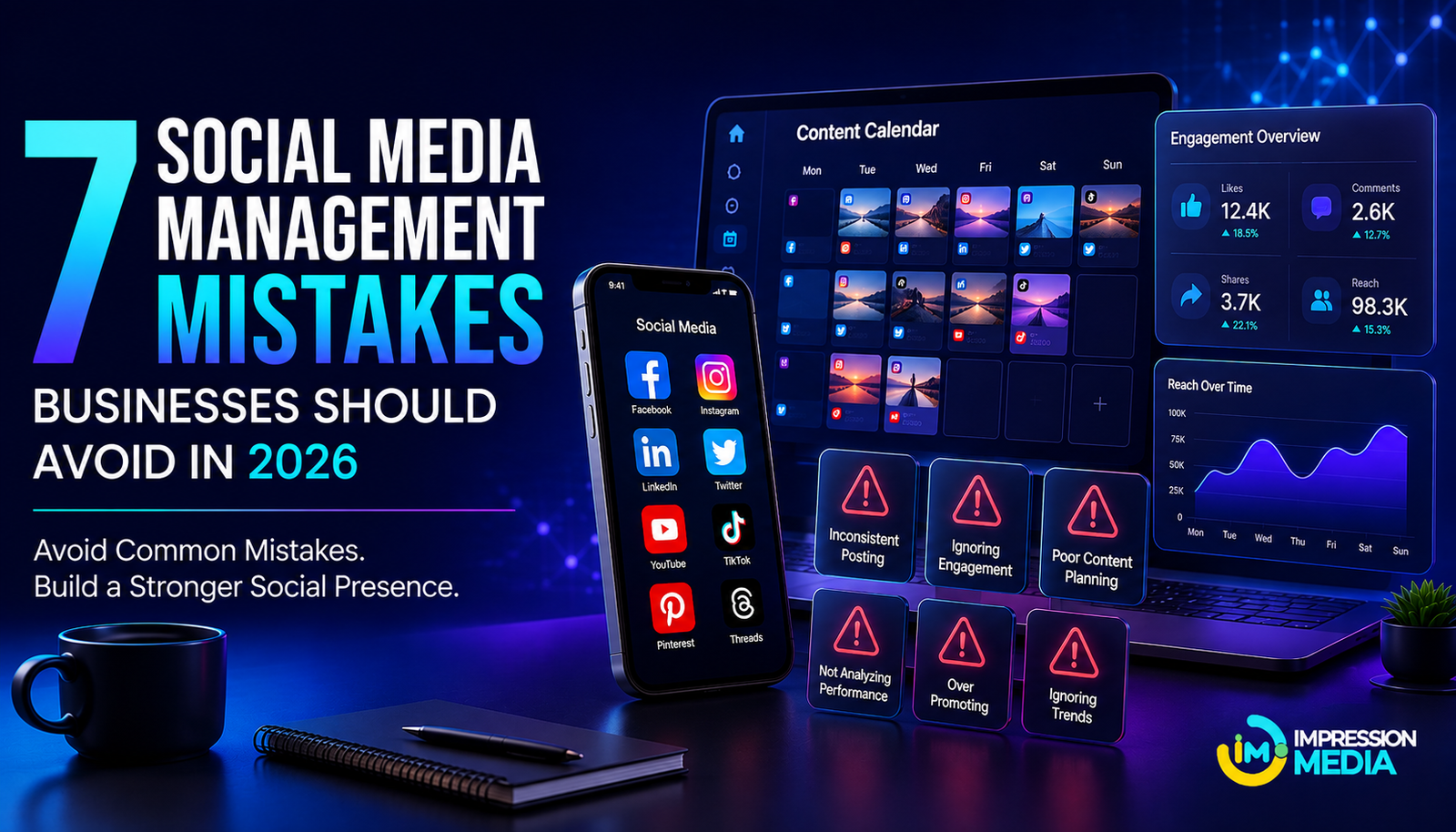
7 Social Media Management Mistakes Businesses Should Avoid in 2026
Social media has become an important part of modern business marketing. Customers use social platforms to discover brands, research products, ask questions, and share experiences.
For businesses, social media provides a valuable way to connect with customers and build a strong online presence. However, simply creating a social media account is not enough.
Poor planning, inconsistent posting, weak content, and limited audience engagement can reduce the effectiveness of your social media efforts.
This is why businesses need a clear social media management strategy.
In this blog, we will discuss seven common social media management mistakes businesses should avoid in 2026.
What Is Social Media Management?
Social media management is the process of planning, creating, publishing, monitoring, and improving content across social media platforms.
It can include:
- Content planning
- Social media posting
- Audience engagement
- Community management
- Performance tracking
- Reputation management
- Social media reporting
Effective social media management helps businesses maintain a consistent presence while building relationships with their audience.
Why Social Media Management Matters in 2026
Social media platforms are constantly changing. New content formats, algorithms, trends, and customer behaviours appear regularly.
Businesses need to stay active and relevant to compete for audience attention.
A strong social media management strategy can help businesses:
- Build brand awareness
- Increase customer engagement
- Drive website traffic
- Generate leads
- Support sales
- Build customer relationships
- Strengthen brand reputation
However, businesses can lose these benefits when they make common management mistakes.
7 Social Media Management Mistakes to Avoid
1. Posting Without a Clear Strategy
One of the most common mistakes is posting content without a clear plan.
Some businesses post whenever they have something to share. Others simply follow trends without considering whether the content fits their brand.
This can create an inconsistent social media presence.
How to Avoid It
Create a social media content strategy.
Define:
- Your target audience
- Your content goals
- Your main topics
- Your posting frequency
- Your preferred platforms
- Your brand voice
A content calendar can also help your team plan posts in advance.
2. Posting Inconsistently
Posting frequently for one week and disappearing for the next can make your brand look inactive.
Consistency helps customers know when to expect content from your business.
How to Avoid It
Create a realistic posting schedule.
You don't need to post several times every day. Choose a frequency your team can maintain consistently.
Use scheduling tools to plan and publish content in advance when appropriate.
3. Focusing Only on Promotional Content
Social media users do not want to see advertisements in every post.
Constantly promoting products or services can make your content repetitive and reduce engagement.
How to Avoid It
Create a healthy mix of content.
For example, you can share:
- Educational tips
- Industry insights
- Customer stories
- Behind-the-scenes content
- Product information
- Promotional offers
- Questions and interactive posts
Focus on providing value before asking customers to buy.
4. Ignoring Comments and Messages
Social media is about communication.
Some businesses publish content regularly but rarely respond to comments, questions, or direct messages.
This can make customers feel ignored.
How to Avoid It
Monitor your social media channels regularly.
Respond to relevant comments and messages in a helpful and professional manner.
Quick responses can improve customer experience and show that your business values its audience.
5. Using the Same Content on Every Platform
Different social media platforms have different audiences and content formats.
Copying the exact same post everywhere may not produce the best results.
How to Avoid It
Adapt your content for each platform.
For example, short-form video may work well on Instagram, while professional insights may perform better on LinkedIn.
Keep your core message consistent but adjust the format and tone based on the platform.
6. Ignoring Social Media Analytics
Posting content without checking performance makes it difficult to understand what works.
Likes alone do not provide enough information about your social media strategy.
How to Avoid It
Track important metrics such as:
- Reach
- Impressions
- Engagement rate
- Follower growth
- Website clicks
- Leads
- Conversions
Use these insights to identify your best-performing content and improve future posts.
7. Chasing Every Social Media Trend
Trends can help brands increase visibility. However, following every trend can make your brand look inconsistent or irrelevant.
Not every viral trend fits every business.
How to Avoid It
Choose trends that match your brand, audience, and goals.
Ask whether the trend provides value before using it.
A relevant and useful post is often better than a viral post that has nothing to do with your business.
How to Improve Your Social Media Management Strategy
Avoiding mistakes is only the first step. Businesses should also build a structured approach to social media management.
1. Create a Content Calendar
Plan your content ahead of time. Include important dates, campaigns, product launches, educational posts, and promotional content.
2. Know Your Audience
Understand what your customers want to see and what problems they need help solving.
3. Maintain Brand Consistency
Use consistent colours, visuals, tone, and messaging across your social media channels.
4. Review Performance Regularly
Check your social media analytics regularly and adjust your content strategy based on real data.
Conclusion
Social media management requires more than posting content regularly. Businesses need a clear strategy, consistent communication, useful content, and continuous performance tracking.
The most common social media management mistakes include posting without a strategy, inconsistent publishing, excessive promotion, ignoring customer interactions, using identical content across platforms, overlooking analytics, and following irrelevant trends.
By avoiding these mistakes, businesses can create a stronger social media presence and build better relationships with their audiences.
In 2026, successful social media management will focus on consistency, relevance, engagement, and measurable results. A thoughtful strategy can help businesses increase visibility, strengthen their brand, and create long-term customer connections.
.jpg)
.png)