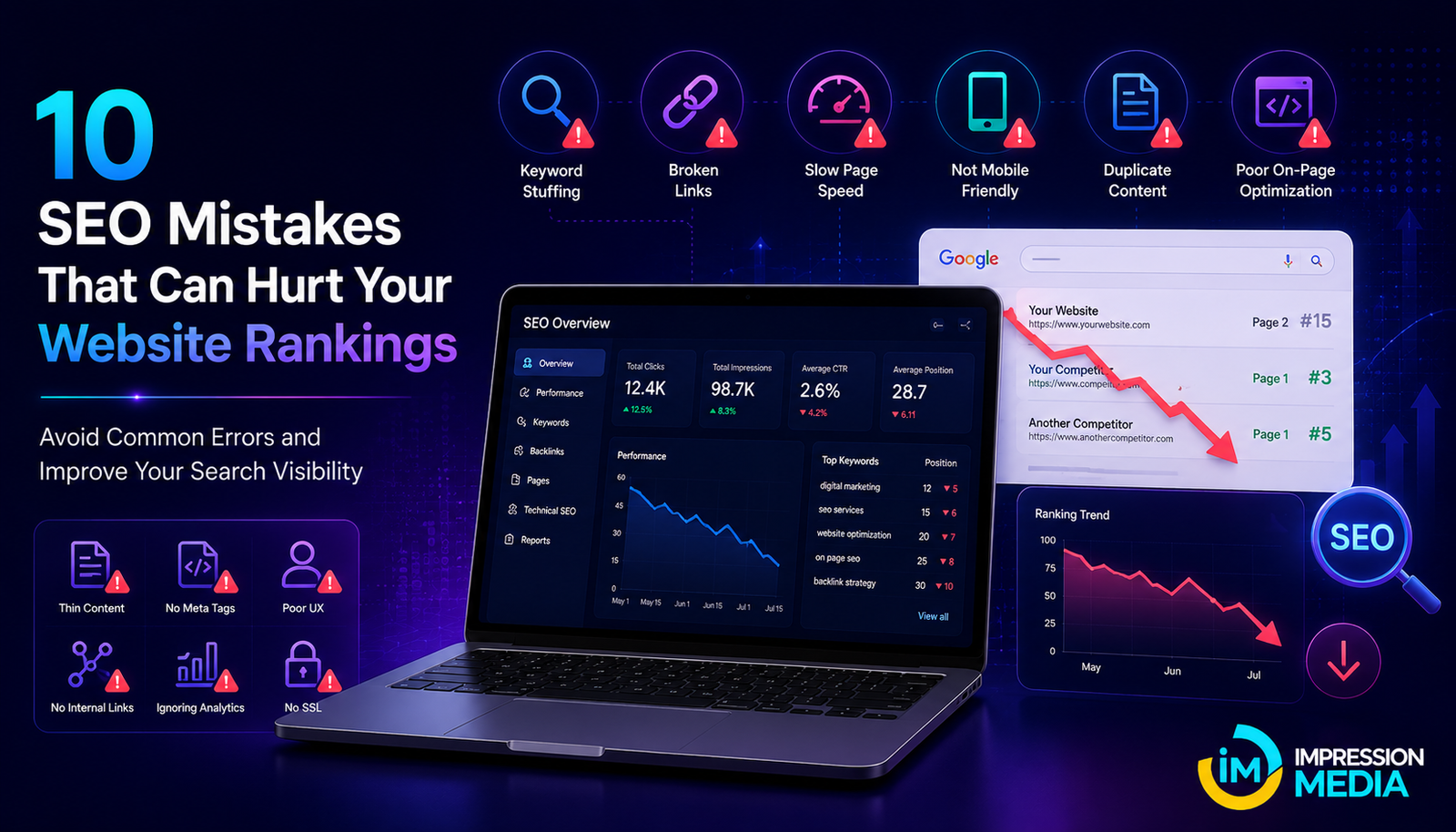
10 SEO Mistakes That Can Hurt Your Website Rankings
Search engine optimization, or SEO, helps businesses improve their visibility on search engines. A well-optimized website can attract more organic traffic, reach potential customers, and build long-term online visibility.
However, SEO is not only about adding keywords to a website. Small mistakes can affect your rankings, reduce website traffic, and make it harder for search engines to understand your content.
Whether you manage a business website, blog, or e-commerce store, avoiding common SEO mistakes can improve your overall search performance.
Here are 10 SEO mistakes that can hurt your website rankings and how you can avoid them.
1. Keyword Stuffing
Keywords are important for SEO. However, using the same keyword too many times can make your content difficult to read.
Search engines can also understand the topic of a page through related terms and context. You don't need to repeat one keyword in every paragraph.
How to Avoid It
Use your main keyword naturally. Include related keywords and write content for people first.
Focus on answering the user's search intent instead of simply repeating keywords.
2. Creating Low-Quality Content
Publishing content only to target keywords can hurt your SEO performance.
Thin, repetitive, or unhelpful content may fail to provide value to visitors. Search engines aim to show useful results that satisfy user needs.
How to Avoid It
Create original and useful content. Answer common customer questions and provide practical information.
Keep your writing simple, accurate, and relevant to your audience.
3. Ignoring Search Intent
Search intent means understanding what users actually want when they search for something.
For example, someone searching for "best running shoes" may want product recommendations. Someone searching for "how to clean running shoes" wants instructions.
How to Avoid It
Study the search results before creating content. Understand whether users want information, products, comparisons, or solutions.
Then create content that matches their intent.
4. Using Poor Page Titles and Meta Descriptions
Your title and meta description help users understand what your page offers.
A confusing title can reduce clicks even when your page ranks well.
How to Avoid It
Create clear and relevant page titles. Include your primary keyword naturally and make the title useful to searchers.
Write a compelling meta description that explains what users can expect from the page.
5. Having a Slow Website
Website speed affects user experience. Visitors may leave if a page takes too long to load.
A slow website can also make it harder for users to explore your content and complete important actions.
How to Avoid It
Improve website performance by:
- Compressing large images.
- Removing unnecessary scripts.
- Using efficient hosting.
- Enabling browser caching.
- Optimising website code.
Also test your website regularly on both desktop and mobile devices.
6. Ignoring Mobile SEO
Many people access websites through smartphones. A website that works well on desktop but performs poorly on mobile can create a poor user experience.
How to Avoid It
Use responsive web design. Make sure text is readable, buttons are easy to tap, and pages work correctly on smaller screens.
Test important pages on different mobile devices.
7. Not Using Internal Links
Internal links connect one page on your website to another. They help visitors discover related content and help search engines understand the structure of your website.
How to Avoid It
Add relevant internal links naturally within your articles and service pages.
For example, a blog about SEO can link to related content about content marketing, keyword research, technical SEO, and website development.
8. Ignoring Technical SEO
Technical SEO helps search engines crawl and understand your website.
Common technical issues include broken links, duplicate pages, poor site structure, and incorrect indexing settings.
How to Avoid It
Regularly check your website for technical problems. Create a logical site structure and make sure important pages can be crawled and indexed.
An XML sitemap can also help search engines discover important pages.
9. Building Low-Quality Backlinks
Backlinks can help build website authority, but not every backlink is valuable.
Buying large numbers of low-quality links or using manipulative link-building methods can create SEO risks.
How to Avoid It
Focus on earning relevant backlinks from trustworthy websites.
Create useful resources, publish original research, contribute valuable insights, and build relationships within your industry.
Quality is more important than quantity.
10. Not Tracking SEO Performance
SEO requires continuous monitoring. Without tracking performance, you may not know which pages are improving or losing traffic.
How to Avoid It
Monitor important SEO metrics such as:
- Organic traffic
- Keyword rankings
- Click-through rate
- Conversions
- Indexed pages
- Backlinks
- Page performance
Use this data to identify problems and improve your SEO strategy.
Conclusion
SEO is a long-term process. Avoiding common mistakes can help your website build stronger search visibility and attract more relevant visitors.
Don't focus only on keywords. Create useful content, understand search intent, improve website speed, optimise for mobile users, build quality links, and monitor your performance regularly.
A successful SEO strategy combines quality content, technical improvements, user experience, and continuous optimisation.
By avoiding these 10 common SEO mistakes, businesses can create a stronger online presence and improve their chances of achieving sustainable website growth.

.png)