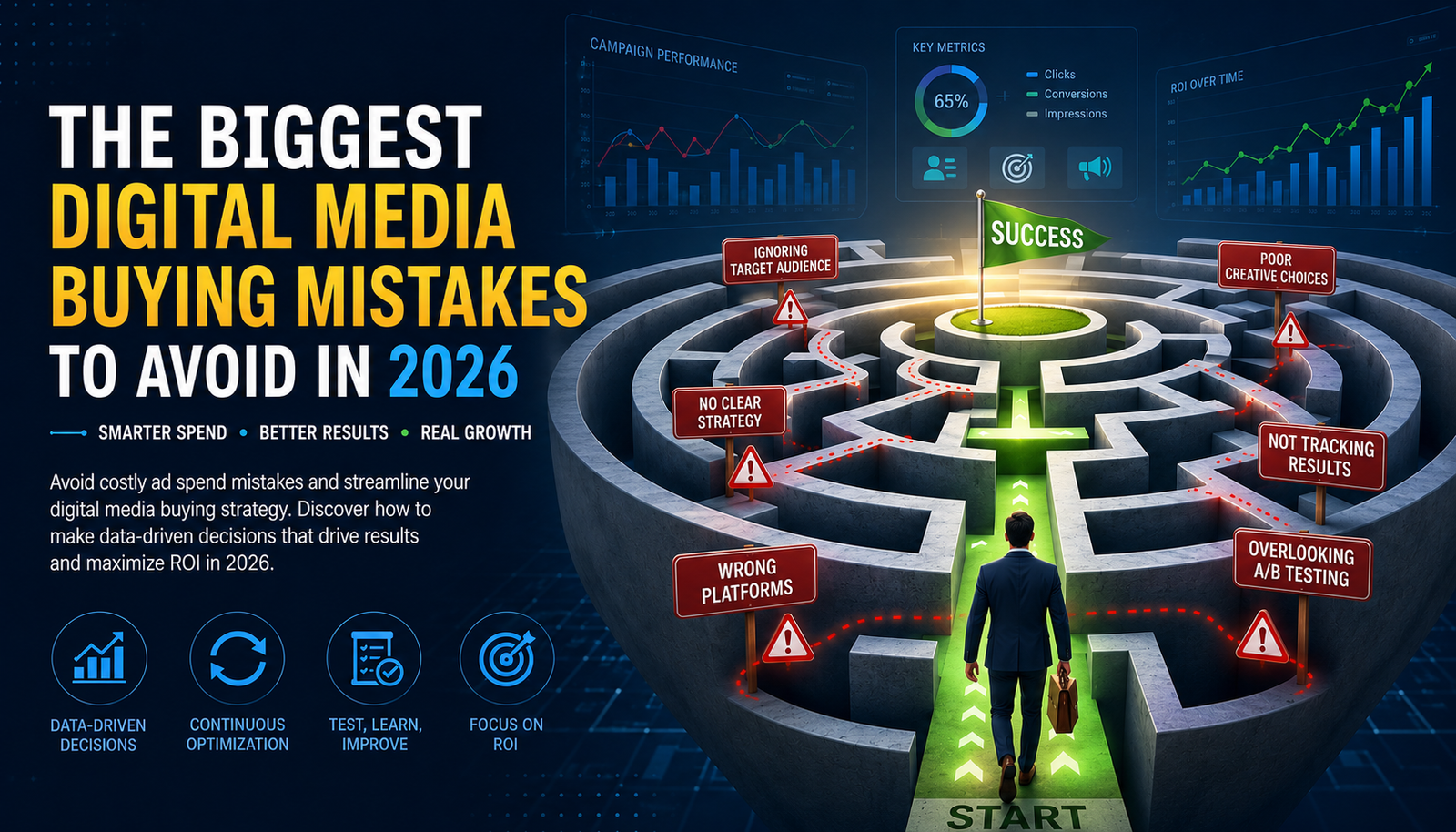
The Biggest Digital Media Buying Mistakes to Avoid in 2026
Digital media buying has become one of the most effective ways to reach the right audience. Businesses can advertise across search engines, social media, websites, and mobile apps with better targeting than ever before. However, even a strong advertising budget can produce poor results if your campaigns are not managed correctly.
As advertising platforms continue to evolve in 2026, businesses need smarter strategies to maximize their return on investment (ROI). In this blog, we explore the biggest digital media buying mistakes and how you can avoid them.
Why Digital Media Buying Matters
Digital media buying is the process of purchasing online advertising space across platforms such as Google, Meta, LinkedIn, YouTube, and programmatic advertising networks. It helps businesses connect with the right audience, increase brand visibility, generate quality leads, and improve conversions.
Success depends on planning, data analysis, and continuous optimization.
1. Targeting the Wrong Audience
One of the biggest mistakes businesses make is showing ads to everyone.
A broad audience often results in wasted advertising spend. Instead, focus on people who are most likely to be interested in your products or services.
Use audience data based on:
- Location
- Age
- Interests
- Buying behavior
- Previous website visitors
Accurate targeting improves campaign performance and lowers advertising costs.
2. Ignoring Campaign Objectives
Many businesses launch campaigns without defining clear goals.
Before investing in digital media buying, ask yourself:
- Do you want brand awareness?
- Do you need more website traffic?
- Are you looking for qualified leads?
- Do you want direct sales?
Each objective requires a different strategy, audience, and advertising format.
3. Not Optimizing Campaigns Regularly
Launching a campaign is only the beginning.
Many advertisers forget to monitor campaign performance after going live. This can lead to poor results and unnecessary spending.
Review your campaigns regularly by checking:
- Click-through rate (CTR)
- Conversion rate
- Cost per click (CPC)
- Cost per acquisition (CPA)
- Return on ad spend (ROAS)
Small adjustments can significantly improve performance.
4. Using Poor Ad Creatives
Even the best targeting cannot save weak advertisements.
Low-quality images, unclear headlines, or confusing messages reduce engagement.
Create ads that:
- Grab attention quickly
- Highlight customer benefits
- Include a clear call to action
- Match your brand identity
High-quality creatives improve clicks and conversions.
5. Ignoring Mobile Users
Most internet users now browse on smartphones.
If your ads or landing pages are not mobile-friendly, visitors may leave without taking action.
Make sure your campaigns include:
- Fast-loading pages
- Mobile-responsive design
- Easy navigation
- Simple contact forms
A smooth mobile experience increases conversion rates.
6. Forgetting Landing Page Optimization
Many advertisers focus only on the advertisement while ignoring the landing page.
If visitors arrive on a slow, confusing, or unrelated page, they are unlikely to convert.
An effective landing page should include:
- Clear headline
- Relevant content
- Fast loading speed
- Strong call to action
- Simple design
The ad and landing page should deliver a consistent message.
7. Depending on One Advertising Platform
Putting your entire budget into a single platform limits your opportunities.
In 2026, successful businesses diversify their advertising across multiple channels such as:
- Google Ads
- Facebook and Instagram
- YouTube
- Programmatic Display Networks
A multi-channel strategy helps you reach customers at different stages of their buying journey.
8. Ignoring Data and Analytics
Data helps businesses make better marketing decisions.
Instead of relying on assumptions, use analytics to understand:
- Which ads perform best
- Which audience converts more
- Which platform generates the highest ROI
- Which campaigns need improvement
Data-driven optimization leads to better long-term results.
9. Failing to Test Different Ads
Running only one version of an advertisement limits your campaign's potential.
A/B testing allows you to compare:
- Headlines
- Images
- Videos
- Call-to-action buttons
- Ad copy
Testing helps identify what works best for your audience.
10. Choosing Price Over Expertise
Many businesses select the cheapest agency instead of the most experienced one.
Professional digital media buying requires market research, audience analysis, campaign optimization, creative strategy, and performance reporting.
Working with experienced professionals often delivers better ROI than simply reducing advertising costs.
Final Thoughts
Digital media buying continues to evolve in 2026, making strategy more important than ever. Avoiding common mistakes can help your business improve campaign performance, reduce wasted spending, and achieve better results.
Success comes from understanding your audience, setting clear objectives, creating engaging ads, optimizing campaigns regularly, and making decisions based on real data.
If you want to maximize your advertising investment, partnering with an experienced digital media buying agency can help you build campaigns that deliver measurable business growth.